159th Annual General Meeting
and
1339th Ordinary General Meeting
 159th Annual General Meeting
Date: Wednesday, 8 April 2026
Time: Annual General Meeting: 6.00–6.20 pm;
Ordinary General Meeting: 6.20–7.50 pm AEST;
Optional Supper: 8.00–9.30 pm
Venue: AGM/OGM: Michael Crouch Room, Mitchell Building, State Library of NSW, Shakespeare Place, Sydney
Pre-meeting drinks: A cash bar will operate from 5.30 pm
Post-meeting supper: An optional supper will be available from Balcon by Tapavino, 17 Bligh Street, Sydney, following the OGM
Registration: AGM/OGM: Please register by 2.00 pm AEST on Tuesday, 7 April 2026
Supper: Registration information to follow
Entry: AGM/OGM: Members, $20; Non-members, $30; Students, $0
Supper: $110 per person (non-refundable) for a fixed menu meal
All are welcome
This notice provides information about the:
Annual General Meeting
Rule 4(c) of the Society’s Rules requires that an Annual General Meeting (AGM) be held in April of each year.
The Agenda for this meeting is now available on the Meetings page of the website.
Business of the Annual General Meeting
The formal business of the Annual General Meeting, including the election of Council Members, will be conducted via an electronic ballot in accordance with Rule 18.
Members, Fellows, and Distinguished Fellows, who are financial at the commencement of the ballot, will receive an email from the Society’s Election Coordinator via the electronic balloting company, Election Buddy. This email will include a unique ballot link that provides a random, secret access key for each voter. Voter anonymity is assured by ballot settings that ensure that voter choices cannot be linked to any voter.
The ballot will run from 12.00 noon AEDT on Monday, 16 March to 12.00 noon AEST on Monday, 6 April and will address:
- Procedural Business:
- Confirmation that the Minutes of the 158th Annual General Meeting be accepted as a true record
- Confirmation that the Annual Report of Council and the Financial Report for the year ending 31 December 2025 be received (*)
- Confirmation of the proposed Auditors for 2026
- Vote on a resolution to vary Rules 8(c) and 8(d) for the Admission of Members and Fellows of the Society, specifically to update the method of communication to Society members for the induction of proposed new members, according to the Explanatory Memorandum
- Election of Office-bearers and Council members.
(*) Please note that the electronic ballot allows members to comment on the Annual Report and Financial Statements. There will be an opportunity to discuss these documents at the AGM, at which feedback from the electronic ballot will be reported.
The results of the electronic ballot will be announced at the Annual General Meeting on 8 April 2026 and will be posted on the Society’s website on the following day.
The Ordinary General Meeting will commence immediately following the conclusion of the Annual General Meeting.
Election of Office-Bearers and Ordinary Members of Council
Listed below are the nominations for the 2025–2026 Council received by the Secretary by 5.00 pm AEDT on Friday, 6 March 2026.
For those Office-bearer and Councillor roles for which there are more nominees than available positions, an election is required.
For roles in which there are the same number of nominees as there are available positions, these candidates will be declared elected at the AGM without the need for a ballot.
In all cases, candidates have been invited to provide an optional statement outlining how their expertise and experience fit them for these roles and will benefit the Society. These statements are available through the links below and are included for information on the electronic ballot form.
| Office/Role | Candidate |
| Treasurer | Erin Gao MRSN (elected unopposed) |
| Councillors | Sean Brawley FRSN |
| (4 vacancies) | Medy Hassan OAM FRSN |
| Liz Killen MRSN | |
| Holly Randell-Moon MRSN | |
| Michael Taylor FRSN | |
| Zile Yu MRSN |
Ordinary General Meeting
The 1339th Ordinary General Meeting will follow the Annual General Meeting and includes a presentation by Dr Catherine Ball, Scientific Futurist and Tech Influencer, and Simon Masters, Deputy Director, Future Flight, InnovateUK.
The Agenda for this meeting is now available on the website’s Meetings page.
“A drone by any other name”
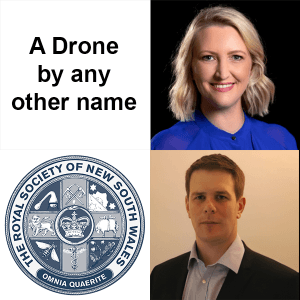
Dr Catherine Ball (1)
and
Simon Masters (2)
(1) Scientific Futurist, Tech Influencer, Robotics Expert, Adjunct Professor
(2) Deputy Director, Future Flight, InnovateUK
Date and Time: Wednesday, 8 April 2026, 6.00–7.30 pm AEST
Venue: Michael Crouch Room, Mitchell Building, State Library of NSW, Shakespeare Place, Sydney
Pre-meeting drinks: A cash bar will operate from 5.30 pm
Post-meeting supper: An optional supper will be available from Balcon by Tapavino, 17 Bligh Street, Sydney, following the OGM
Registration: OGM: Please register before 2.00 pm AEST on Tuesday, 7 April
Supper: Registration information to follow
Entry: OGM: Members, $20; Non-members, $30; Students, $0
Supper: $110 per person (non-refundable) for a fixed menu meal
All are welcome
Summary: For a decade, Australia was the global drone rule-maker, and the UK was still warming up.
This presentation tells the story of a regulatory power shift. Australia got out fast, with CASA’s 2016 reforms making commercial drone operations easier and more accessible well before many markets caught up. It was bold, practical, and business-friendly. In many ways, Australia wrote the early playbook for modern drone regulation.
But being first is not the same as staying first.
The UK arrived later, then surged ahead by pairing regulation with serious national investment and a coordinated cross-government approach. It moved into a more advanced risk-based framework, aligned drone policy with broader aviation reform, and backed it with a Future of Flight strategy designed to scale real-world operations, including beyond visual line of sight. In short, the UK did not just regulate drones; it funded the future they needed.
This session compares the two countries side by side, showing how Australia led on early regulatory innovation, while the UK built the stronger long game through capital, policy alignment, and industry mobilisation.
If Australia proved drones could be regulated, the UK is proving they can be scaled.
And that difference is now shaping who leads the next decade.
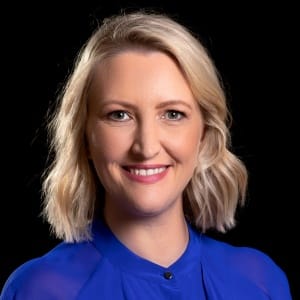 Dr Catherine Ball is an award-winning company director, bestselling author, futurist and adjunct professor working across global projects where emerging technologies meet humanitarian, education and environmental needs.
Working to protect the natural environment and empowering all members of society through mutual education and respect are core aspects of her chosen projects. As well as supporting start-ups and leaders from all generations across the globe, Catherine is particularly passionate about social mobility and equity.
Catherine is proud to be an advisor to a broad range of enterprises and philanthropic organisations, including being an XPRIZE visioneer and member of their Global Brains Trust.
 Simon Masters has 20 years of experience across industry and public sector roles. With a background in aerospace and technology, he has held senior positions in the civil and military aerospace sectors, including systems engineering and R&D roles with Airbus and BAE SYSTEMS.
He took up the role of Deputy Director for the Future Flight Challenge within InnovateUK in 2020, focusing on developing drone and advanced air mobility capabilities and supporting systems in the UK. He has led efforts to integrate technology solutions with emerging use cases, particularly those addressing needs and opportunities in public services. In 2024, he took on the leadership of the Future Flight Challenge program as it transitions from R&D to commercialisation and growth. Passionate about innovation and collaboration, he has worked to build international partnerships across Europe, Japan and Australia.


 31 December 2026
 Various face-to-face and online venues