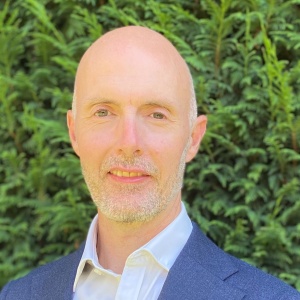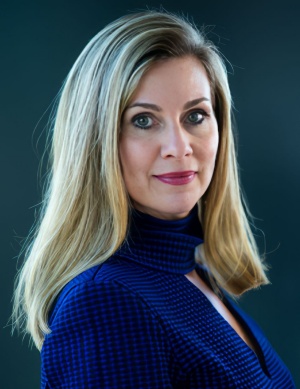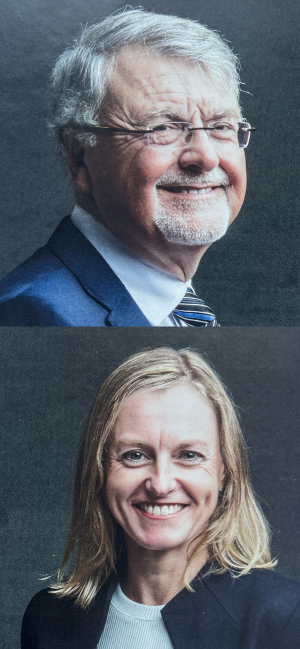
Michael Archer is a distinguished biologist and palaeobiologist. Born in
Sydney, he moved to the United States and trained as an undergraduate in
geology and biology at Princeton University and gained consecutive Fulbright
Scholarships for palaeontological research at the Western Australian Museum
from 1967 to 1969. He completed a PhD in Zoology at the University of Western
Australia in 1976.
A vertebrate palaeontologist and mammalogist, he was Curator of Mammals at the Queensland Museum from 1972 to 1978 and then moved to the University of NSW, where he was appointed Professor of Biological Science in 1989. He became Director of the Australian Museum in Sydney in 1999 until he returned to the University of NSW in 2004 as Dean of the Faculty of Science. He has recently returned to a position of Professor in the Faculty.
He has authored several major works which reflect his scientific achievements. These include Fossil Mammals of Australia and New Guinea, Riversleigh and Predators with Pouches. His interest in social developments is seen from his involvement with the Children's Creative Workshop Advisory Board, the TAFE Advisory Board, the World Wildlife Fund Scientific Advisory Board, and as trustee of the Australian Geographical Society.
In 1990 Professor Archer won the inaugural Eureka Prize for the Promotion of Science. He is a Fellow of the Royal Zoological Society and a Fellow of the Australian Academy of Science and was honoured as a Member of the Order Australia in 2008.
Elizabeth H. Blackburn, Morris Herztein Professor of Biology and Physiology in
the Department of Biochemistry and Biophysics at the University of California,
San Francisco, is a leader in the area of telomere and telomerase research.
She discovered the molecular nature of telomeres - the ends of eukaryotic chromosomes that serve as protective caps essential for preserving genetic information and the ribonucleoprotein enzyme telomerase. Professor Blackburn and her research team are working with various cells including human cells, with the goal of understanding telomerase and telomere biology.
Professor Blackburn earned her BSc (1970) and MSc (1972) degrees from the University of Melbourne, and her PhD (1975) from the University of Cambridge in England. She did her postdoctoral work in molecular and cellular biology from 1975 to 1977 at Yale.
In 1978, Professor Blackburn joined the faculty at the University of California at Berkeley in the Department of Molecular Biology. In 1990, she joined the Department of Microbiology and Immunology at UC San Francisco, where she served as Department Chair from 1993 to 1999. Blackburn is currently a faculty member in the Department of Biochemistry and Biophysics at UCSF. She is also a Non- Resident Fellow of the Salk Institute.
Throughout her career, Blackburn has been honoured by her peers as the recipient of many prestigious awards. She was elected President of the American Society for Cell Biology for the year 1998. Blackburn is an elected Fellow of the American Academy of Arts and Sciences (1991), the Royal Society of London (1992), the American Academy of Microbiology (1993), and the American Association for the Advancement of Science (2000).
She was elected Foreign Associate of the National Academy of Sciences in 1993, and was elected as a Member of the Institute of Medicine in 2000. She was awarded the Albert Lasker Medical Research Award in Basic Medical Research (2006). In 2007 she was named one of TIME Magazine.s 100 Most influential People and she is the 2008 North American Laureate for L'Oreal-UNESCO For Women in Science.
In 2009, Dr Blackburn was awarded the Nobel Prize in Physiology or Medicine.
Robert Graham Clark has been Chief Scientist at the Australian Defence Science
and Technology Organization since 2008 and is a Fellow of the Australian
Academy of Science and an Australian Research Commission Federation Fellow.
As a Royal Australian Navy cadet, Clark simultaneously undertook a science degree at the Royal Australian Naval College, Jarvis Bay. His lowest grade was a High Distinction in his Honours year even though he was undertaking his naval service in the South Pacific at the same time. His thesis was published with Sir Ernest Titterton of the Australian National University as co-author in the prestigious journal Physical Review. A Master's degree from Oxford University and a joint Doctor of Philosophy from the Universities of New South Wales and Oxford led him to become a Fellow of Queen's College, Oxford. He was involved in the discovery of the Wigner crystal and the broken von-Klitzing-effect. This work was the starting point of a long list of most prestigious publications.
He was appointed Professor of Experimental Physics at the University of New South Wales in 1989 and was permitted to bring his one million pound's worth of equipment to Sydney with him. He was appointed Director of the Center of Excellence for Quantum Computer Technology in 1994 and was elected Scientia Professor at that university in 2006. He has attracted more than $82million of research funding. Professor Clark has been honoured with the Boas Medal of the Australian Institute of Physics, the Australian Defence Medal, the Centenary Medal, and has delivered the Mott Lecture at the Institute of Physics in London.
David Parker Craig is a distinguished chemist.
His distinguished career began with his appointment as Professor of Physical
Chemistry at the University of Sydney in 1952. In 1956 he was appointed
Professor of Theoretical Chemistry at University College London. He returned to
Australia in 1967 to begin his long association with the Australian National
University. In that year he was appointed Professor of Physical and Theoretical
Chemistry, in which role he continued until 1984. During this time he was Dean
of the Research School of Chemistry twice, from 1970-1973 and from 1977-1981.
He was an Executive Member of CSIRO from 1980 to 1985, when he was given the
title of Emeritus Professor by the Australian National University.
David Craig's research work was in several fields but was especially pioneering in the then new and very difficult field of excitons in molecular crystals. He also did major work in the field of molecular quantum electrodynamics.
In 1985 he was appointed an Officer of the Order of Australia. He is Fellow of the Royal Australian Chemical Institute, a Fellow of the Royal Institute of Chemistry (London), a Fellow of the Royal Society, and a Fellow of the Australian Academy of Science, serving as President from 1990 to 1994. He was awarded Doctor of Science (honoris causa) from the University of Sydney and Honorary Doctor of Chemistry from the University of Bologna.
Professor Hush is one of Australia's most distinguished and internationally renowned chemists
with outstanding achievements in computational and theoretical quantum chemistry. In a long
career of academic research, he has worked to provide understanding at the basic quantum-theoretical
level of chemical properties and reactivities. This has been extremely wide-ranging in scope,
a continuing theme being the dynamics of electron transfer reactions, from through-molecule
electron transport to electrode processes, photosynthesis and most recently, molecular electronics,
the ultimate form of nanotechnology. His most renowned achievement is the development,
commencing in the 1960’s, of a model for electron transfer, which is often referred to
as the “Marcus-Hush Theory”.
In 1972, after 23 years at major universities in the United Kingdom, Professor Hush returned to Australia to establish this country's first academic department devoted to theoretical chemistry – at The University of Sydney. A wide-ranging teaching program was introduced, and a flourishing research program evolved. His work has established both Australia and The University of Sydney as major world players in the field. This legacy continues now long after his formal retirement, with Theoretical Chemistry being listed in 2011 as one of 15 research areas at which the University is internationally truly outstanding. Professor Hush himself remains actively engaged in research at this University.
Professor Hush has been elected a Fellow of the Australian Academy of Science, of the Royal Society of London, and to Foreign Membership of the U.S. Academy of Arts and Sciences, as well as an Officer of the Order of Australia. In 2007 he was awarded the Robert A. Welch Prize, the major United States award for chemical research and second only to the Nobel Prize as an honour in Chemistry, given for the first time for Theoretical Chemistry. Other awards include the David Craig Medal and the Finder Medal of the Australian Academy of Sciences, and the Centenary medal of the Royal Academy of Chemistry (UK).
Professor Barry Jones AO FAA FAHA FTSE FASSA FRSN has no formal training as a scientist but has had a passionate interest in history of philosophy of science from childhood and, as a politician, work passionately to secure appropriate recognition of the importance of scientific research in Australia’s intellectual, social, cultural and economic development. He was a member of the Victorian Legislative Assembly from 1972 to 1977 and of the Australian House of Representatives from 1977 to 1998. He was Australia’s longest serving Minister for Science from 1983 to 1990. Barry Jones identified major issues and placed them firmly on the political agenda long before their importance was recognised widely by the community. These included the post-industrial decline of Australian manufacturing, the need to embrace the information revolution, global climate change, recognising the importance of Antarctica for scientific research and the importance of engagement in the biotechnology revolution. He has been awarded seven honorary doctorates and is the only person to have been elected as a Fellow of all four of Australia’s learned Academies.
Kurt Lambeck has been at the Australian National University since 1977,
including ten years as Director of the Research School of Earth Sciences. He
is the immediate past President of the Australian Academy of Science and a
member of the Antarctic Ecosystem and Environment CRC. Before returning to
Australia he was Professor at the University of Paris. He has also worked at the
Smithsonian and Harvard Observatories in Cambridge, USA. He has studied at
the University of New South Wales, the Technical University of Delft, Netherlands,
the National Technical University of Athens and Oxford University from which
he obtained DPhil and DSc degrees. He has held visiting appointments
in Belgium, Britain, Canada, France, Netherlands, Norway and Sweden.
He was elected to the Australian Academy of Science in 1984 and to the Royal Society in 1994. He is a foreign member of the Royal Netherlands Academy of Arts and Sciences (1993), Norwegian Academy of Science and Letters (1994), Academia Europaea (1999), the Académie des Sciences, Institut de France (2005), and the US National Academy of Sciences (2009). He has received a number of international prizes and awards including the Tage Erlander Prize from the Swedish Research Council (2001), the Prix George Lemaître from the Université catholique de Louvain (2001), and the Eminent Scientist Award from the Japan Society for the Promotion of Science (2004).
He has published two books and more than 250 papers on subjects in geophysics, geology, geodesy, space science, celestial mechanics, environmental geoscience, and glaciology.
Eugenie Lumbers is an internationally respected authority on
foetal and maternal physiology. For many years she has worked in cardiovascular
and renal physiology, with particular reference to blood pressure regulation
in the renin-angiotensin system. She graduated MBBS in Adelaide in 1965 and
received an MD in 1970. She was awarded a DSc at the University of NSW in1986
where she was given a personal chair in 1988. She received the Vice Chancellor's
Award for Teaching Excellence in 1997, became Scientia Professor in 1999 and
Emeritus Scientia Professor in 2003. She was elected Fellow of the Australian
Academy of Science in 2002.
In 2007 she developed new research interests at the University of Newcastle and was awarded an NHMRC grant in 2008. She further expanded her research interests in 2009 with three other NHMRC grants. She received the Centenary Medal of Federation, Australia in 2001.
Robert, Lord May of Oxford, holds a Professorship jointly at Oxford University
and Imperial College, London and is a Fellow of Merton College, Oxford. He
was until recently President of The Royal Society of London (2000-2005), and
before that Chief Scientific Adviser to the UK Government and Head of the UK
Office of Science and Technology (1995-2000). He is also
a member of the UK Government's Climate Change Committee, a non-executive
director of the UK Defence Science & Technology Laboratories and
until recently Chaired the Trustees of the Natural History Museum.
His career includes a Personal Chair in Theoretical Physics at Sydney University aged 33, Class of 1877 Professor of Zoology and Chairman of the Research Board at Princeton, and in 1988 a move to Britain and Oxford as Royal Society Research Professor.
He was awarded a Knighthood in 1996, and appointed a Companion of the Order of Australia in 1998, both for "Services to Science". In 2001 he was one of the first 15 Life Peers created by the "House of Lords Appointments Commission". In 2002, The Queen appointed him to the Order of Merit (the fifth Australian in its 100-year history).
His many honours include: the Royal Swedish Academy's Crafoord Prize; the Swiss-Italian Balzan Prize; and the Japanese Blue Planet Prize. He is a Foreign Member of the US National Academy of Sciences, an Overseas Fellow of the Australian Academy of Sciences, and an Honorary Fellow of the Royal Academy of Engineering and several other Academies and Learned Societies in the UK, USA and Australia. In 2007, he received the Royal Society's Copley Medal, its oldest (1731) and most prestigious award, given annually for "outstanding achievements in research in any branch of science".
Brian Schmidt is Distinguished Professor at the Research School of Astronomy and
Astrophysics, Australian National University. He was born in the US and educated at the University of
Arizona and Harvard, from which he has both Masters and PhD degrees in astronomy. He moved to Australia
in 1994. Brian Schmidt is an internationally renowned researcher and cosmology and the physics of
supernovae and gamma-ray bursts. His pioneering work in radio astronomy leading the High-Z Supernovae
Research Team led to the discovery that the expansion of universe is accelerating, an extraordinary
discovery that provided the foundation for an entirely new conception of the universe. For this
pioneering work he shared the 2011 Nobel Prize in Physics. He has received a number of prestigious
international awards, including the Australian Academy of Science’s Pawsey Medal, the Shaw Prize in
Astronomy and the Gruber Cosmology Prize. He was elected a fellow of the Royal Society in 2012.
Michelle Simmons is a Federation Fellow and Director of
the Atomic Fabrication Facility at the University of NSW. In the 1990s, she spent
six years as a Research Fellow working with Professor Sir Michael Pepper FRS at
the Cavendish Laboratory in Cambridge, UK, in quantum electronics. Her
research in nanoelectronics combines molecular beam epitaxy and scanning
tunnelling microscopy to develop novel electronic devices at the atomic
scale. She has published more than 260 papers in refereed journals (with over
3200 citations), published a book on Nanotechnology, four book chapters
on quantum electronics, has filed four patents and has presented over 50
invited and plenary presentations at international conferences.
In 2005 she was awarded the Pawsey Medal by the Australian Academy of Science and in 2006 became the one of the youngest elected Fellows of this Academy. Professor Simmons is the only women in Australia to have twice received a Federation Fellowship, the Australian Research Council.s most prestigious award of this kind. She was one of the first women to be made a professor of physics in Australia.
Richard Limon Stanton is a distinguished geologist. He was Professor of
Geology at the University of New England, Armidale from 1975 to 1986 and
subsequently Emeritus Professor. He is a Fellow of the Australian Academy of
Science.
Awarded an MSc and PhD from the University of Sydney, Richard Stanton's subsequent achievements focused on mineral exploration. He recognised the role of volcanism and sedimentation in the formation of new ore deposits, and the physics and chemistry involved in the concentration of copper, zinc and lead in volcanic lavas. This is documented in his numerous publications and books, including Ore Petrology, The Precursor Principle, and Ore Elements in Arc Lavas.
Professor Stanton was Royal Society and Nuffield Foundation Bursar at Imperial College London and the University of Durham in 1964 and won a Fulbright Award in 1966. He won the Goldfields Gold Medal of the Institute of Mining and Metallurgy (London) in 1976 and the William Smith Medal of the Geological Society (London) in 1987. He became Honorary Fellow of the Institute of Mining and Metallurgy (London) in 1984 and was Vice-President of the Australian Academy of Science from 1989 to 1990. He was elected Honorary Fellow of the Geological Society of America in 1991, and was awarded the Brownie Medal of the Geological Society of Australia in 1990, the Penrose Medal of the Society of Economic Geologists in 1993, and the Haddon Forrester King Medal of the Australian Academy of Science in 1998.
He has received several awards from the Royal Society of New South Wales, including the Olle Prize in 1972, the Society's Medal in 1973, and the Clarke Medal in 1998, and he presented the Clarke Memorial Lecture in 1985. He was instrumental in the successful operation of the New England Branch of the Society. He was honoured for his achievements by becoming an Officer of the Order of Australia in 1996.
Professor Trewhella began her academic career after studying mathematics and physics
at the University of NSW, where she also completed a masters degree in physics.
Graduating with a doctorate in inorganic chemistry in 1980 from the University of Sydney,
she accepted a post-doctoral position at Yale University, where she was appointed an
associate research scientist in 1983, and in 1984, she was invited to join the
Los Alamos National Laboratory to launch a biological neutron scattering program.
She soon began using neutrons to study how nature regulates the activities of
biological molecules. Her work gained her international recognition for her
contribution to our understanding of the molecular communication that underpins healthy function.
Professor Trewhella spent 20 years building multidisciplinary programs at
Los Alamos where she was appointed Director of Bioscience in 2000. This work was
recognised with her election as a Fellow of the American Association for the
Advancement of Science and as an Australian Research Council Federation Fellow in 2004.
She also gained the rare distinction of being elected Fellow of the Los Alamos National Laboratory.
With her Federation Fellowship, Professor Trewhella took up joint appointments as Professor of Molecular Bioscience at the University of Sydney and at the neutron scattering research facility, the Bragg Institute, south of Sydney. In January 2009 Professor Trewhella was appointed to her current position of Deputy Vice-Chancellor (Research) at the University of Sydney where she continues to maintain extensive research interests of her own.
Professor Trewhella originally set out to train as a high school teacher, but she never dreamed that one day her career path would bring her into contact with a US president. Her decision to accept an invitation to enrol in an honours physics program at the University of NSW later resulted in her advising George W. Bush on available technologies to defend against bio-terrorism.
Bruce Albert Warren is a distinguished pathologist who has reached the highest
levels of medical research through academic achievement, university management
and publication activity.
Following his medical training at the University of Sydney, he obtained a Master of Arts, Doctor of Philosophy and Doctor of Science at the University of Oxford. Following further research and teaching in Canada, Warren began a long and distinguished career as Professor and Head of Department of Pathology at the Prince Henry/Prince of Wales Hospital of the University of New South Wales in 1980, where he remained until his retirement in 1997.
During his career Professor Warren published eighty-one papers, mainly concerned with tumour biology and thrombosis. He is also the author of many textbooks about basic histology and atheroembolisms and he was the editor of the Journal of the Royal College of Pathologists in Australasia from 1988 to 1995.
He is Fellow of the Australian Institute of Management, a Fellow of the Royal College of Pathologists and a Fellow of the Royal College of Pathologists of Australasia. He is Life Fellow of the Royal Microscopical Society, a Life Member of the American Association for the Advancement of Science, and was Member of the Scientific Advisory Committee of the New South Wales Division of the National Heart Foundation from 1983 to 1996.
Professor Warren served the Royal Society of New South Wales as President from 1981 to 1982 and as a Council Member from 1980 to 1981.
Gavin Brown was a distinguished mathematician and educator. He was Inaugural
Director of the Royal Institution of Australia after 12
years as Vice-Chancellor and Principal of the University of Sydney.
His academic career began at the University of Liverpool, where he became a senior lecturer in mathematics. He accepted the Chair of Pure Mathematics at the University of New South Wales in 1975 when he and his family emigrated to Australia.
At the University of New South Wales, he held a number of academic administrative posts, including Head of the School of Mathematics, and Dean of the Faculty of Science. In 1992, he became the Deputy Vice-Chancellor (Research) at the University of Adelaide and later, in 1994, he became Vice-Chancellor. He was appointed Vice-Chancellor of the University of Sydney in 1996.
He authored more than a hundred research papers and was on the editorial board of several international journals. His research areas have been broad, including measure theory and algebraic geometry. He held a Master of Arts degree (1st Class Honours and the Duncan Medal) from the University of St Andrews and a PhD from the University of Newcastle-upon-Tyne. Professor Brown's contributions to education and mathematics have been recognised worldwide. He was a Fellow of the Australian Academy of Science and Corresponding Fellow of the Royal Society of Edinburgh. In 2001 he was awarded the Centenary Medal for service to Australian society and university administration and mathematics.
In 2006 he was appointed an Officer of the Order of Australia for service to tertiary education in Australia and internationally as an advocate for excellence and through the establishment of strategic links with overseas institutions, and to mathematical research. Professor Brown has also received the Royal Society of New South Wales Medal.
Professor Brown died in December 2010.
Jak Kelly was appointed as an Inaugural Fellow of the Royal Society of New
South Wales for his work of international stature in Applied Physics and for
his contributions to science generally and to the Royal Society of New South
Wales in particular. He was awarded a Doctor of Science by the University of NSW, was
a Fellow of the Australian Institute of Physics and a Fellow of the Institute
of Physics in the UK.
After graduating with a Bachelor of Science from the University of Sydney, Professor Kelly joined CSIRO and later obtained a PhD from the University of Reading in the UK where he solved the problem of measuring the surface tension of molten tungsten and other refractory metals. Following a senior scientific position at the Harwell Atomic Energy Establishment in the UK, he joined the University of New South Wales and established an internationally renowned research centre on ion implantation and material defects. His research included basic discoveries in thermoluminescent dating and the development of new systems of ion beam optics and laser and plasma physics. He jointly invented a photovoltaic solar collector surface, which, at the time, was the world's most efficient and is now in mass production in China.
This work was published in some 150 refereed papers and several patents. Professor Kelly was Head of Physics and the Chairman of the Faculty of Science at the University of New South Wales. As President, and for many years Vice-President, he contributed much to the progress of the Royal Society of New South Wales, including serving as the Editor of its Journal.
Professor Kelly died in February 2012.

This honour is awarded to distinguished contributors to science, art, literature or philosophy. Fellows are entitled to use the postnominal FRSN.
On 13 September 2012, the President announced the appointment of two new Fellows. They are:
The distinguished physicist and Nobel laureate, Professor Brian Schmidt AC FAA FRS FRSN and the writer, lawyer, social activist and former politician Professor Barry Jones AO FAA FAHA FTSE FASSA FRSN.
They will be presented with their Fellowships on at Government House, Sydney, on Wednesday 13 March 2013 by the Society's patron, the Governor of NSW, Her Excellency Professor Marie Bashir AC CVO.
________________
Fellows appointed in 2011 were:
Professor Noel Hush AO DSc FRS FNAS FAA FRSN FRACI
Professor Jill Trewhella FAAAS FLANL FRSN
They were presented with their Fellowships by the NSW Chief Scientist and Engineer, Professor Mary O'Kane, on Friday 24 February 2012 at the Society's Annual Dinner in Sydney.
________________
Fellows appointed in 2010 were:
Professor Lord May of Oxford, OM AC Kt FRS FAA FRSN
Professor Elizabeth Blackburn AC FRS FRSN
Professor Kurt Lambeck AO FRS FAA FRSN
Emeritus Scientia Professor Eugenie Lumbers FAA FRSN and
Professor Michelle Simmons FAA FRSN
________________
The Society's inaugural Fellows appointed in 2009 were:
Professor Michael Archer AM FAA
Professor Gavin Brown AO FAA CorrFRSE
Professor Robert Clark FAA
Professor David Craig AO FRS FAA
Professor Jak Kelly DSc FInstP (London) FAIP
Professor Richard Stanton
Professor Bruce Warren DSc FRCPA FRCPath